











By Genny Boots
Pacific Lutheran University houses a music department that’s regionally, nationally and internationally acclaimed.
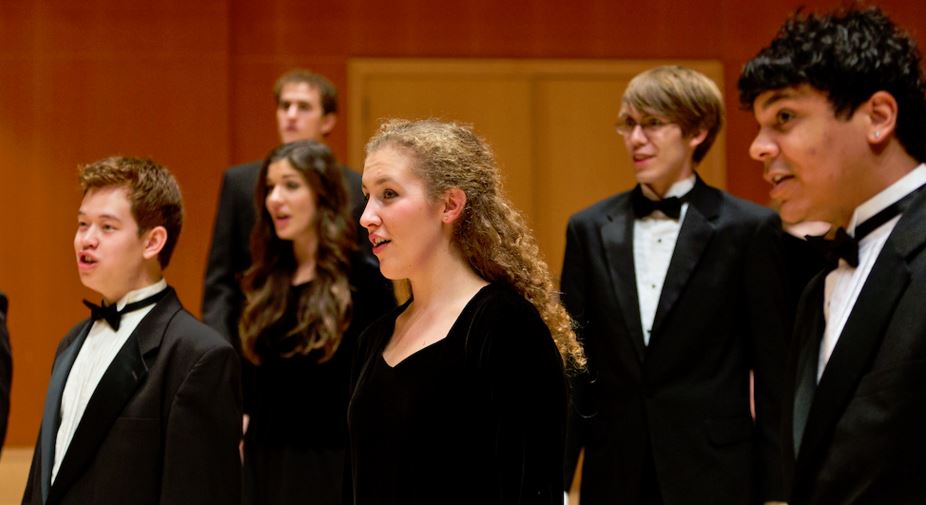
This music department has tackled some of the most difficult operas, won international choir titles, brought in world famous composers and conductors and has produced some of the foremost performers in the profession today.
The music program at PLU connects us to our university’s past, sets a path for our future and makes one music department very, very busy.
WHY SO MANY MUSICIANS?
If you’re in the Puget Sound music community, or have teachers, coaches and/ or directors from the Lutheran tradition, you’re sure to know PLU. It seems like everybody had a choir director who went to PLU, or whose family member went to PLU to study music.
According to admission statistics, about 25 percent of Lutes participate in the music program. A large faculty presence mixed with a hungry student body produces a perfect, probably cacophonous, storm.
PLU is not a conservatory, such as Juilliard or Oberlin, but the competitive program is based off of this model. PLU students are required to take classes outside the music program as a part of PLU’s overall liberal arts curriculum.
“The level of performance is, in many cases, as you’d find at a conservatory, but it is done at a liberal arts setting. That is even more remarkable because the students can’t dedicate their full time to just performance,” said Choir of the West Director Richard Nance. “I am really amazed by the things they do.”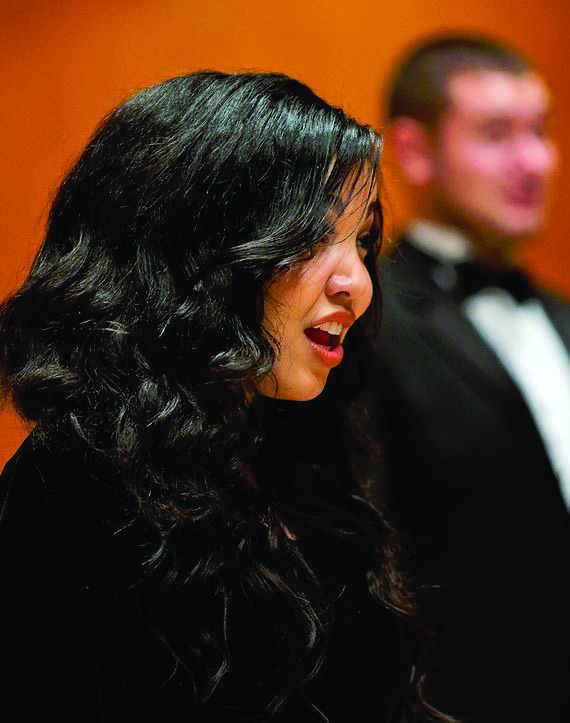
This high level of performance partly comes from a performance-based faculty. Most of the music faculty do not hold doctorate degrees like their cross-campus counterparts. The majority of professors have a Doctorate of Musical Arts (D.M.A). This is a more performanced-based, rather than theoretical, degree. “Most of us are performers. That is where our home base is and we think in those terms,” said Director of Orchestral Activities Jeffery Bell-Hansen.
In recent years, the staff has also widely grown. For a small liberal arts school of 3,000 undergraduates, a typical music faculty would look more like four or five. At PLU, there are 15 full-time music faculty.
“When I got here, I was the 15th or 16th full time member of the faculty. It was staggering for a place this size, and they seemed utterly fearless,” said Professor of Music and Composer Greg Youtz.
There are also around 40 part-time faculty that teach specialized lessons to students.
This performance mindset, mixed with a dose of fearlessness, has produced some incredible undergraduate performances.
In 2007, the PLU opera program performed Monteverdi’s “L’Orfeo” for the PLU mainstage. According to Brown, the Director of Vocal Studies this is performance is an accomplishment to perform and PLU opera undergraduates students took it on.
“Everybody in music knows this opera, and nobody does it, partly because it is really hard,” Youtz said. “It was outrageous. What school our size would do something like that? Or have the connections to do something like that?”
It is this type high level work that keeps professors coming back. “That community of people that can make music at such a high level and do it together — there is something really electric about that. When it’s really going, everything is meshing together, you feel this electricity in the room that you just can’t get anywhere else,” Nance said.
The PLU environment creates a particular music community. “Because it’s a small school, we don’t have these various things that people get distracted by. So there is a real focus on music here,” Nance said. “Not that there aren’t other great programs.
There certainly are, but there’s a real focus on music here that is very visible.”
A part of that focus is rooted in PLU’s middle name. The musical heritage attached to our Lutheran identity is, in part, how the music program started and remains so strong.
History
The PLU music program began right after the school’s charter was signed in 1890. “We love to tell the tale that, after the president, the first person hired at PLU in 1890 was the music professor,” said Youtz. “Because if this is a school for Lutherans, you have to have a choir. It’s absolutely essential. So that’s the story and we’re sticking with it.”
And so came the Choir of the West. In 1925, the choir was formed and has been a mainstay at PLU ever since. Through the years, the choir gained regional acclaim, with several national and international tours. Yet the biggest turning point of the Choir of the West and whole music department came in the 1960s. PLU welcomed Maurice Skones as the new choir director and department chair. Skones was an instrumental part of where the PLU music program is today.
Under Skones, PLU welcomed the world famous Polish composer Krzysztof Penderecki to campus. The Choir of the West performed the west coast premiere of Penderecki’s “Passion According to Saint Luke” in 1974. That performance garnered critical acclaim and put PLU officially on the map.
“I talked to people who had been at that performance, and there was buzz about that for a decade and half. Suddenly everyone knew that PLU was the school that had Krzysztof Penderecki and had done the west coast premiere of his ‘Passion,’” said Youtz.
 “You do one sort of big thing like that and it literally sticks in people’s minds for a very long time.”
Thanks to Skones and then Dave Robbins, two powerful department chairs, the PLU music department quickly began to grow.
The PLU name still holds strong in the musical community, with connections that have continued to bring in well-known and regarded composers, directors and performers.
Growing connections come from a faculty that is still creative and actively involved in their professional careers. “We are getting more and more faculty who are deeply invested in the creative, professional work of their field,” said Youtz. “What this means is that students not only get to see us be excellent teachers in the classroom, but they get to hover over us as we do our professional thing. I saw less of that when I first arrived.”
The history of professional, well-trained faculty has not ended, but the new wave of professors who are also current professionals has made a big impact on the music department. “Students are our new colleagues and we really think of them that way,” said Bell-Hansen.
CHRISTMAS CONCERTS
One of the biggest performances of the year is the annual PLU Christmas Concert Series.
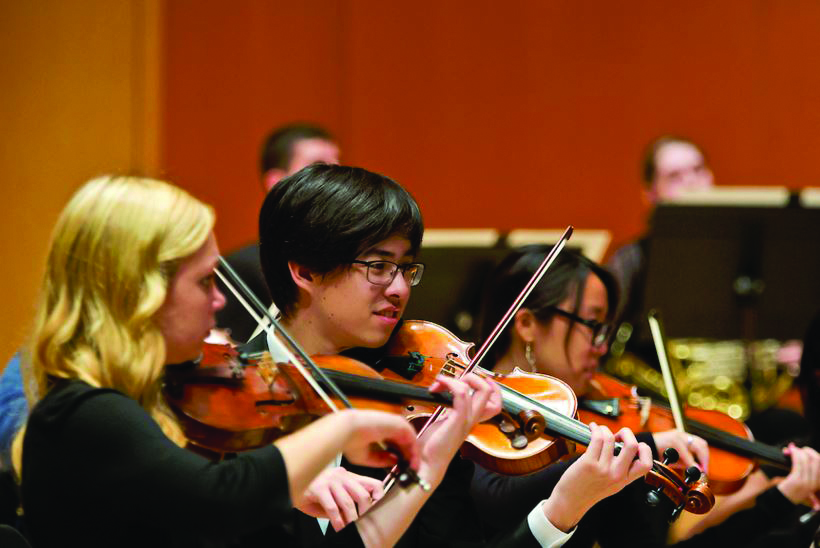
These concerts have been an important tradition for the music department. The choirs and orchestras spend all month rehearsing while students balance the end of the year rush.
“I swear, no one is as busy as a music student,” said Nance.
This year the Christmas Concert is particularly special. As it is the 125th year of PLU, a special Anniversary Gala Performance will be held Dec. 11. This performance will feature PLU alum, and current New York Metropolitan Opera singer, Angela Meade.
The orchestra will also be premiering a piece by Los Angeles composer J.A.C Redford. According to his biography, Redford has written and composed for Hollywood blockbusters such as “The Little Mermaid,” “Skyfall” and “Avatar.”
Redford composed a piece for the University Chorale, Choir of the West and the University Symphony Orchestra especially for this year’s concert series.
And to really sweeten the pot, the gala performance will be broadcast on Seattle public broadcasting station KCTS (Channel 9) and Oregon Public Broadcasting stations on Christmas Eve, and on OPB Christmas Day.
The concert will also be available on DVD starting spring 2016 and be shown during the holiday season countrywide.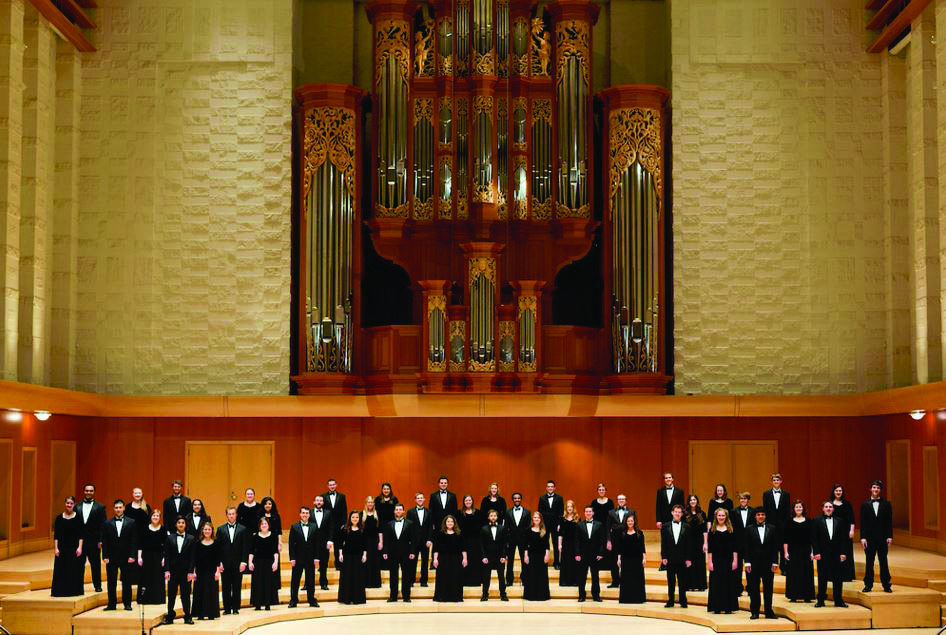
Performances are held in the Benaroya Concert Hall in Seattle, Schnitzer Concert Hall in Portland and in Lagerquist on campus. These shows typically sell out within a few days, and this year’s performance is no exception. At time of print, tickets remain for the Seattle and Portland shows only.
The Christmas concerts are one of the biggest gateways for the public into the PLU music program.
These concerts are only a handful compared to the 100-plus performances each year. “I don’t think that people really understand how much we do. And usually if someone comes to our concerts who has never been before, they come back. They see it’s a really good thing to go to,” said Nance.
All concerts are livestreamed online, but to get the full experience, a live show is a must. “There is definitely an interaction between what is going on onstage and who is in the audience. There is a personal connection there that is really important,” said Nance.
SO WHAT?
In short, the music department at PLU is a big deal. Hours of work, practice and performing by students and faculty build on a strong and reputable music program. “I would like to say that we are certainly a unique kind of institution. I would never claim to be the best, but I’m not even sure I find that an interesting thing to say,” Youtz said.
PLU music figureheads, Richard Nance, Gregory Youtz and Jeffery Bell-Hansen, across three interviews, during a stressful and hectic time of travel and rehearsal, all said the same three words about PLU: “Why would I go anywhere else?”