









Matthew Salzano, A&E Editor
In the U.S., 40 percent of food produced is wasted — and that equation just doesn’t add up.
This is the message in Pacific Lutheran University’s newest MediaLab documentary, “Waste Not,” which premiered Nov. 8 at the Broadway Center for Performing Arts in Tacoma, Wash.
The event was much like the movie: almost entirely student-produced. The event was introduced by PLU seniors Anne-Marie Falloria, Amanda Brasgalla, Taylor Lunka, Olivia Ash and junior Grace Takehara. The five MediaLab associates told the story of the film — the timeline, the travel, the donors and the experience.
“We’ve learned a lot about food and how it’s wasted,” Lunka said. “And we’ve learned a lot about ourselves.”
The film, which ran approximately 30 minutes, was produced mostly by students. The team of senior producers included Lunka and Brasgalla, and Ash was the chief videographer and narrator.
“Waste Not” focused on more than just how and where food is wasted. It also focused on what individuals can do now about food waste.
One expert in the film was an organic farmer named Kate Edwards, affectionately called “Farmer Kate.”
Edwards said that people aren’t connected to their food, but are “connected to convenience.”
The film seemed to strive to re-connect people to their food and how to use it best.
The film presented five key terms which can help individuals take action: planning, portions, date labels, storage and forgotten foods.
According to “Waste Not,” focusing on these five key terms helps individuals and families use all of their food to its fullest rather than leaving waste behind.
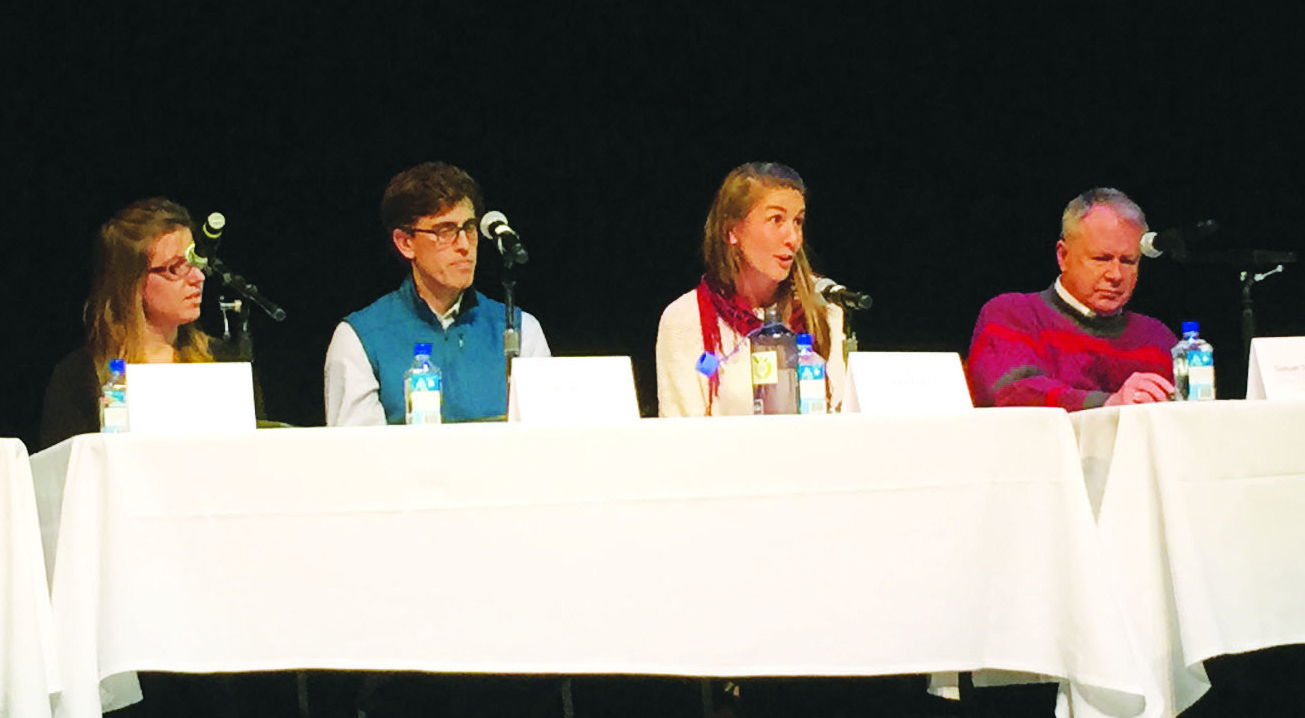
After viewing the film, movie-goers could stick around for a panel. The panel was composed of seven food waste experts, most of whom were in the film.
These experts helped illuminate topics within the film as they answered audience questions and explained further background on what their work entailed.
Beth Elliot, Executive Director for FISH Food Banks of Pierce County, was present on the panel. Her insight drove the issue closer to home.
“There is a lot of poverty in Pierce county,” Elliot said. She said FISH served 562,000 people last year, and that 40 percent of these people were 18 years old or younger.
Dana Frasz, founder of FoodShift, an organization out of Oakland, Calif., which facilitates organizations long-term sustainability efforts, educated audiences about “food deserts,” which are areas containing no real access to fresh produce. Pierce County has several of these areas.
The “Waste Not” premiere event contained many of these lessons about food waste in an attempt to see what will balance the food equation.
Further information on “Waste Not” is available by contacting MediaLab at ml@plu.edu.